



Key Takeaways
- An RSG certificate is required for many people working in licensed venues that offer gambling services.
- RSG stands for Responsible Service of Gambling and teaches staff how to promote safe and responsible gambling practices.
- The course covers recognising signs of problem gambling, legal responsibilities, customer support and harm minimisation.
- Requirements vary between Australian states and territories, so it’s important to complete a course approved for the state where you intend to work.
If you work in a pub, club, casino or licensed venue that operates gaming facilities in Australia, you will need an RSG Certificate.
An RSG (Responsible Service of Gambling) certificate indicates you have received specialised training to ensure gambling services such as poker machines (pokies), TAB betting or Keno are provided responsibly and in accordance with state legislation.
Completed in as little as a day, RSG training teaches workers how to recognise and respond to problem gambling behaviours while ensuring they understand their legal obligations and responsibilities.
In Australia, responsible gambling laws are designed to reduce gambling-related harm and ensure licensed venues provide a safe environment for patrons.
RSG training forms an important part of these laws by equipping hospitality workers with the knowledge and skills to recognise risky gambling behaviours and respond appropriately.
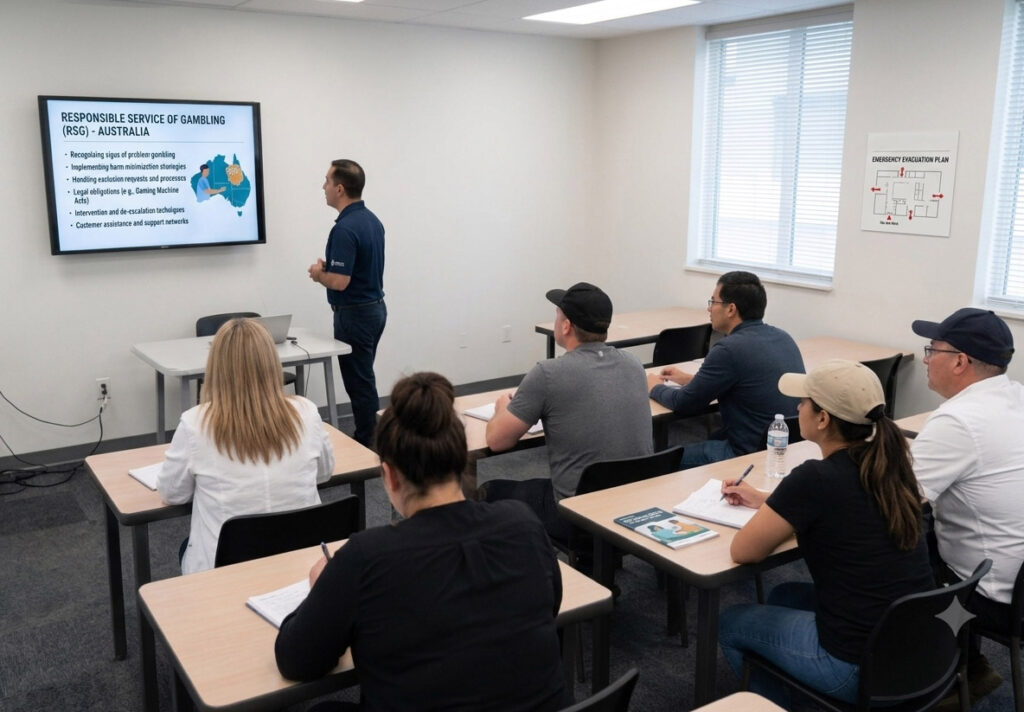
What Is an RSG Certificate?
An RSG certificate is a nationally recognised qualification that trains hospitality and gaming staff to provide gambling services responsibly.
Its primary purpose is to help reduce gambling-related harm while ensuring workers understand their legal responsibilities when interacting with patrons in licensed gaming venues.
The course focuses on reducing gambling-related harm by teaching workers how to:
- recognise signs of problem gambling
- communicate appropriately with patrons
- understand gambling legislation
- follow venue policies and procedures
- respond to customers seeking assistance
- promote responsible gambling practices.
In vocational training, the course is commonly delivered as SITHGAM201 – Provide Responsible Gambling Services.
After successfully completing the course, participants receive a Statement of Attainment for the relevant unit of competency, commonly referred to as an RSG certificate.
Although the qualification is often known as an RSG certificate, some states use different terminology. For example, in New South Wales the qualification is referred to as Responsible Conduct of Gambling (RCG), although the overall purpose is the same.
Is the RSG the Same as the RCG Certificate?
Both RSG and RCG cover the same information, but the name changes depending on which state you’re in. RCG stands for Responsible Conduct of Gambling and is what NSW uses. Every other state calls it Responsible Service of Gaming, or RSG.
The content is basically the same, how to spot problem gambling, how to handle exclusions, your legal obligations as a staff member.
But there’s a catch: they’re not interchangeable. If you’ve done your RSG interstate and you move to NSW, that certificate won’t allow you to work at gaming venues. You still need the RCG.
Same goes the other way, your RCG certificate from NSW won’t work if you take a job in another state.

Who Needs an RSG Certificate?
In Australia, RSG requirements apply to several hospitality and gaming roles. If a job involves direct interaction with gambling services or customers in gaming areas, an RSG certificate is often a mandatory requirement rather than an optional extra. Common roles include:
- Gaming attendants
- Club and pub staff
- Casino employees
- TAB operators
- Keno staff
- Gaming supervisors
- Duty managers
- Some security staff working in gaming areas
Many employers also require staff who regularly work near gaming areas to complete RSG training, even if gambling isn’t their primary responsibility.
Having an RSG certificate before applying for jobs can make you a more competitive candidate, particularly in hospitality venues where gaming forms a significant part of the business.
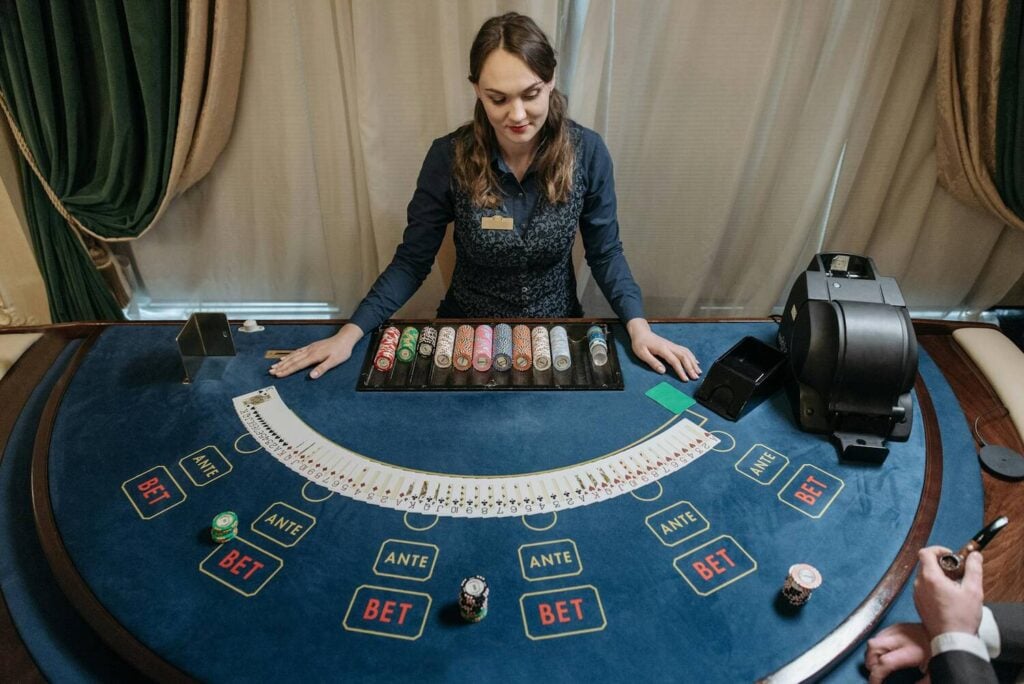
What Do You Learn During an RSG Course?
An RSG course is designed to equip workers with the knowledge and practical skills needed to provide gambling services responsibly.
Rather than simply explaining the rules, the training focuses on real-world situations that hospitality staff may encounter while working in licensed venues. Although individual providers may vary slightly, most approved RSG courses cover similar topics, including:
- gambling legislation
- responsible gambling principles
- recognising signs of gambling harm
- communicating with vulnerable customers
- customer assistance strategies
- self-exclusion processes
- venue responsibilities
- ethical service standards
- record keeping and reporting procedures
- managing difficult situations.
Most courses use practical scenarios based on real hospitality environments, helping participants build confidence before entering the workplace.
How To Get an RSG Certificate in Australia
While the exact requirements vary between Australian states and territories, the overall pathway to get your RSG is similar and can often be completed in just a few simple steps.

Step 1: Choose an Approved Training Provider
Always enrol with a Registered Training Organisation (RTO) or another provider approved to deliver RSG training in your state.
Step 2: Complete the Training
Depending on your location, you may complete the course:
- online
- virtually with a trainer
- face-to-face in a classroom.
Training usually takes only a few hours and can often be completed in a single day.
Step 3: Complete the Assessment
You’ll complete an assessment that demonstrates your understanding of responsible gambling principles and legal obligations.
Step 4: Receive Your Certificate
Once you’ve successfully completed the course, you’ll receive your Statement of Attainment or RSG certificate, allowing you to seek employment where applicable.
Do RSG Requirements Differ Between States?
Yes. Although the core principles of responsible gambling are consistent across Australia, gambling legislation is administered by individual state and territory governments. As a result, the specific training requirements, approved course providers, and certification processes can vary depending on where you intend to work.
For example, some states accept online training, while others require face-to-face or virtual classroom delivery. Certain jurisdictions may also require additional licensing, competency cards or venue-specific approvals before you can begin working in gaming areas.
If you plan to work interstate, it’s worth checking whether your existing qualification is recognised or if you need additional training.
How Long Does an RSG Course Take?
One reason the RSG/RCG certificate is popular is that you can undertake the training relatively quickly. Most courses are completed within a day, depending on the delivery method and provider.
Some providers issue digital certificates on the same day after successful completion, allowing participants to begin applying for jobs almost immediately.

How Much Does an RSG Certificate Cost?
RSG courses are pretty affordable. Most providers charge somewhere around $150, though prices can vary a little depending on your state and how you complete it, if it’s an online course, it sometimes costs less than face-to-face ones.
Some employers will cover the cost if you’re starting a new job in gaming or hospitality, so it’s worth asking before you pay out of pocket.
We don’t recommend choosing the coursed based on price alone. The course needs to be delivered by a Registered Training Organisation (RTO) or a provider approved in your state. If it’s not, your certificate won’t be accepted by employers or regulators, and you’ll end up paying twice.
Where Can an RSG Certificate Be Used?
An RSG certificate can open up a lot of doors in the hospitality and gaming industries. Most licensed venues that run gaming facilities need their staff to hold a current responsible gambling qualification. If you’re just starting out in hospitality or already working in it and want to pick up more shifts, having your RSG is likely to offer more opportunities.
Typical workplaces include:
- licensed pubs
- registered clubs
- casinos
- hotels
- sporting clubs
- entertainment venues
- TAB agencies
- community clubs
- gaming lounges.
Many hospitality workers choose to obtain both an RSA and an RSG certificate to increase their chances of getting hired.
What’s the Difference Between an RSA and an RSG?
People often confuse these two qualifications. An RSA (Responsible Service of Alcohol) focuses on serving alcohol safely and legally.
An RSG (Responsible Service of Gambling) focuses on providing gambling services responsibly while minimising gambling harm. Many venues require staff to hold both qualifications, particularly pubs and clubs that serve alcohol and operate gaming facilities.
Having both certifications makes you eligible for a wider range of hospitality positions.
Is an RSG Certificate Worth Getting?
If you want to work in licensed gaming venues, yes, it’s definitely worth getting it. The course is affordable, you finish it in a single day, and a lot of employers won’t even consider you without it.
Coming in with your RSG already done shows you’re serious, which matters when you’re new to the industry and up against people with more experience. Pair it with an RSA and you’re qualified for a much wider range of hospitality roles across the country.

Frequently Asked Questions
Does an RSG Certificate Expire?
This depends on your state. In some parts of Australia, your RSG certificate doesn’t have an official expiry date, but that doesn’t mean you’re set for life.
Responsible gambling legislation does change, and venues often expect staff to stay current. Some states require renewal or ongoing training at set intervals. It’s worth checking the rules for your specific state to confirm your certificate is still valid and accepted by employers.
What Happens if You Work in a Gaming Venue Without a RSG/RCG?
It’s not a risk worth taking. You and your employer take the risk of getting fined when working in a gaming venue without the required RSG certificate.
Venues that allow unqualified staff in gaming areas can face serious penalties, including losing their gaming licence. For you personally, it could mean losing your job or being blocked from working in licensed venues altogether. Regulators don’t tend to look the other way on this one.
Do I Need Any Prior Experience to Enrol?
No. The RSG course is built for people at every stage of their hospitality career, including those who have never worked in gaming before. There are no prerequisites, no entry requirements, and no minimum experience level.
You don’t need a hospitality background to get started. The course covers everything from scratch, so you’ll come out the other side knowing exactly what’s expected of you on the job.
What Happens if I Fail the RSG Assessment?
Most providers will give you another attempt. The assessment is designed to confirm you understand the basics of responsible gambling, not to trip you up. If you don’t pass first time, you can usually resit, sometimes on the same day, sometimes after a short waiting period depending on the provider.
It’s worth going back over the course material before your second attempt. Check your provider’s resit policy before you start so you know where you stand.
Can I Do My RSG While Already Working at a Venue?
Most venues won’t let you on the gaming floor without it, and honestly, that’s not a problem. The course takes a day. There’s no reason to show up to your first shift without it sorted. Get it done before you apply, or at the very latest before you start. It costs around $150, takes a few hours, and removes a barrier that could otherwise cost you the job before you’ve even begun.
Enrol in a Hospitality Course Near You
If this got you thinking about a career in hospitality, that’s your sign to do something about it. HCA has courses designed for real people with real schedules, whether you’re just starting out or looking to move up in the industry.
You’ll get practical, industry-relevant training that actually prepares you for the job. Just the skills employers are looking for right now. Ready to take the next step? Browse our courses at hca.edu.au and find one near you.